
The Keys are Intelligence and Control
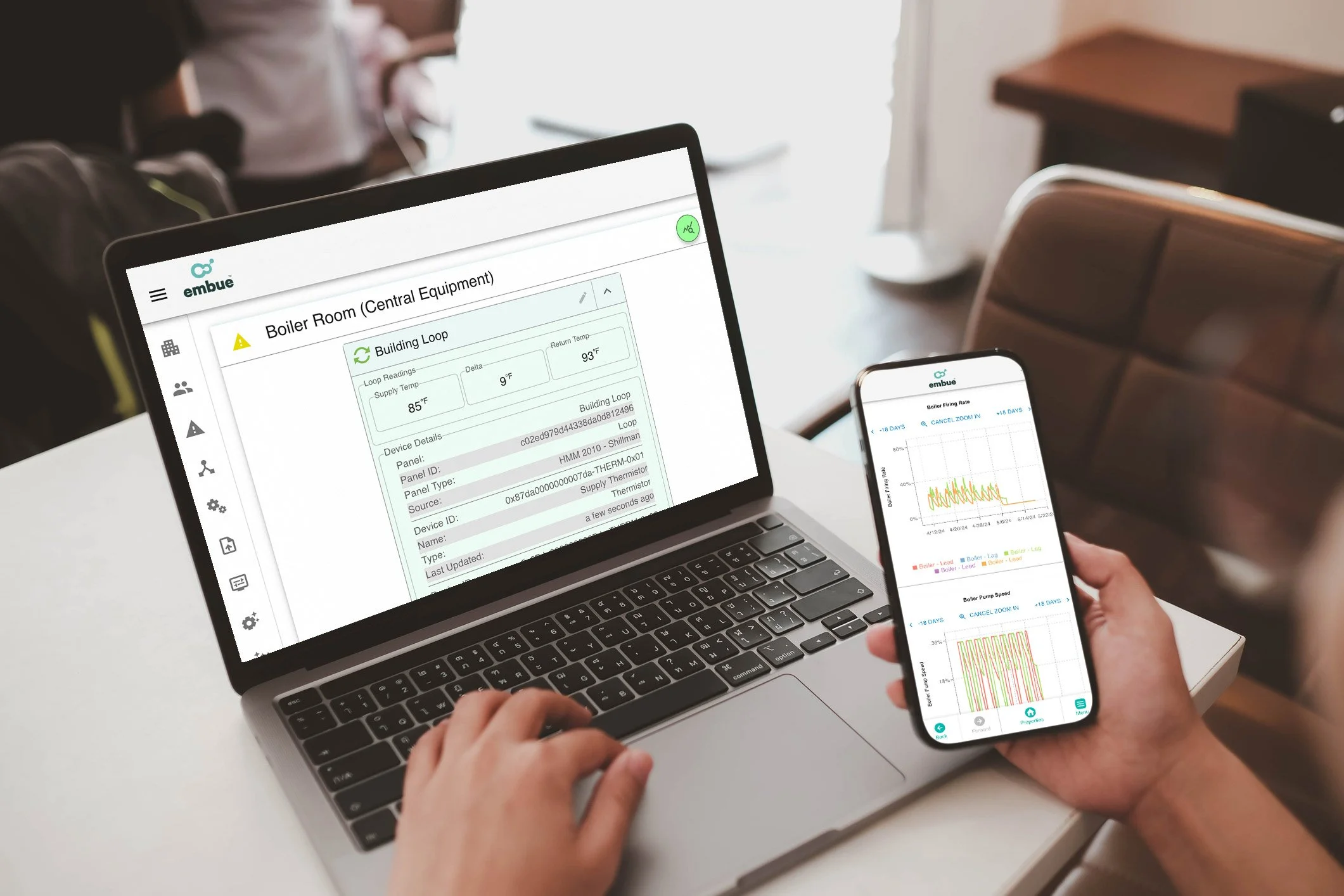
Embue offers apartment-by-apartment visibility and control.
Multifamily buildings account for up to 39 percent of total housing, along with a significant share of total energy use across the built environment, primarily through heating, cooling, and ventilation. Yet much of that energy is wasted, not because equipment is broken, but because multifamily owners and operators lack data about how the building is operating and true control.
In most portfolios, building systems operate in the dark. Staff make adjustments manually, residents set thermostats independently, and owners see only monthly bills, long after inefficiencies have already cost them money. The result: wasted energy, avoidable maintenance, and rising costs across thousands of units.
The good news? You don’t need to replace equipment to fix it. The answer lies in intelligent control, the kind enabled by connected platforms like Embue, which make energy use visible, predictable, and automatically optimized in real time.
Common Drivers of Energy Waste
1. Lack of Granular, Real-Time Visibility
Most multifamily operations still rely on utility bills and manual checks to track energy use. It’s like trying to drive by looking in the rearview mirror: focusing on the cost offers no insight into when or where waste occurs.
The Opportunity:
By connecting thermostats, HVAC systems, and distributed sensors (temperature, humidity, occupancy) to a unified software platform, property teams gain live, apartment-by-apartment visibility and control. Platforms like Embue convert raw data into actionable intelligence, identifying anomalies and revealing savings opportunities portfolio-wide.
2. Unbounded or Inconsistent Temperature Setpoints
Without consistent temperature policies, HVAC systems run far longer than needed. Residents and staff may overheat or overcool units, may run the AC at the same time as the heat, driving up runtime and costs.

Smart thermostats managed through a centralized platform can automatically enforce seasonal temperature bands.
The Opportunity:
Smart thermostats managed through a centralized platform can automatically enforce seasonal temperature bands, reset setpoints between occupancies, and respond dynamically to weather and occupancy patterns. Even modest adjustments, like a 1°F lower heat setting, can save 3% on winter energy bills. At scale, that’s tens of thousands in annual savings per property, while protecting resident comfort.
Add sensor intelligence, and the system gets even smarter. For example, window open/close sensors integrated with thermostats can detect when a window is open and automatically turn down the heat or AC to avoid wasting energy. It’s a simple step that prevents one of the most common — and costly — forms of behavioral energy waste, without requiring staff intervention.
3. Manual, Reactive Maintenance Workflows
Most operators only find out about comfort or performance issues when residents complain, meaning the building has already wasted energy for days or weeks.
The Opportunity:
Intelligent control systems continuously monitor HVAC performance against modeled expectations. When equipment starts short cycling, running long, or deviating from expected efficiency, the system flags early, so issues can be addressed through scheduled maintenance and not on an emergency basis.
4. Absence of Centralized Policy Control Across Portfolios
Large operators often manage dozens or hundreds of properties, but energy policies are applied inconsistently. Each site runs its own version of “best effort,” with no reliable enforcement or feedback.

When equipment starts short cycling, running long, or deviating from expected efficiency, the system flags early, so issues can be addressed through scheduled maintenance and not on an emergency basis
The Opportunity:
With a platform-level control system, portfolio managers can define standardized comfort, schedule, and alert policies across all assets and adjust them instantly. Local overrides remain available, but the baseline consistency drives predictable, measurable outcomes portfolio-wide.
Efficiency Without Equipment Replacement
The majority of energy waste in multifamily buildings comes from how systems are operated, not what systems are installed. Intelligent control, coordination, and automation can reduce HVAC-related energy use by 10–30%, typically with payback in under a year.
Practical steps include:
Enforcing consistent temperature setpoints
Deploying default schedules across all units
Detecting anomalies in real time
Coordinating HVAC and ventilation based on occupancy and weather
Using building data to guide capital planning and retrofits
These operational upgrades deliver measurable ROI, improve resident comfort, and extend equipment life, all without major capital investment.
Final Notes
As energy costs rise and decarbonization pressures mount, multifamily owners face a pivotal choice: continue managing buildings reactively, or adopt the software and control systems that make efficiency automatic.
The future of building performance isn’t about hardware or new equipment. It’s about intelligence. Platforms like Embue give owners portfolio-wide visibility and control, transforming ordinary buildings into high-performing assets that are smarter, more resilient, and more affordable to operate.